
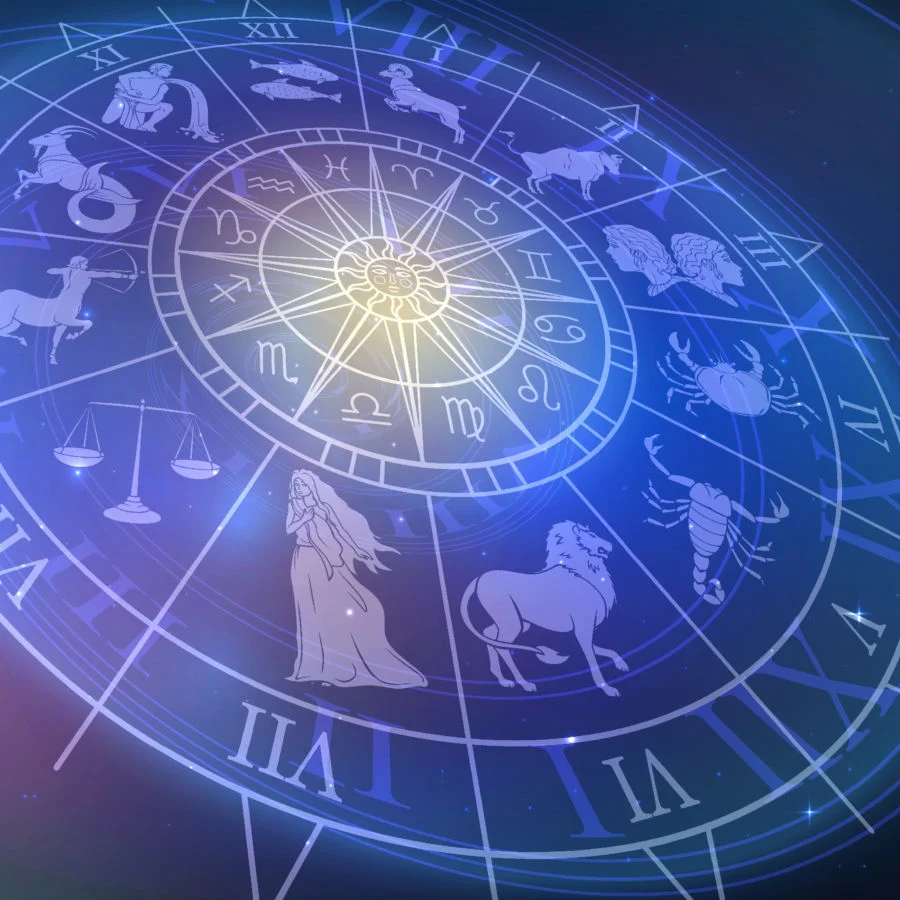
True astrology is a complex, deeply nuanced system that maps the exact positions of all the planets, the sun, and the moon at the precise moment and location of your birth. This map is known as your natal chart (or birth chart). Think of your natal chart as a cosmic fingerprint; no two charts are exactly identical.
To truly understand how astrology can illuminate your personality, career path, and love life, you have to look beyond the Sun sign. Let’s dive into the core components of professional astrology and discover how the cosmos are influencing your daily life.
1. Beyond the Sun Sign: The “Big Three”
When an astrologer first looks at your natal chart, they usually focus on your “Big Three.” These are the three most fundamental pillars of your personality.
- The Sun Sign: This is your core identity, your ego, and your overarching life purpose. It represents the traits you are learning to embody and express throughout your life.
- The Moon Sign: This dictates your inner emotional world, your subconscious reactions, and what you need to feel safe and secure.
- The Rising Sign (Ascendant): This is the “mask” you wear in public. It determines your physical appearance, your initial outward behavior, and how other people perceive you upon first meeting.
Understanding your Big Three explains why two people with the same Sun sign can have wildly different personalities. A fiery Aries Sun with a sensitive Cancer Moon will behave very differently than an Aries Sun with a detached Aquarius Moon.
2. The Moon Sign: Your Emotional Blueprint
If the Sun is who you are learning to be, the Moon is who you already are behind closed doors. Your Moon sign reveals your deepest, most instinctual self. It dictates how you process grief, how you express love, and what you desperately need when you are stressed.
“You can date someone based on their Sun sign, but you marry them based on their Moon sign.”
In romantic relationships, Moon sign compatibility is arguably more important than Sun sign compatibility. If your Moon is in a water sign (Cancer, Scorpio, Pisces), you process emotions deeply and require profound empathy from a partner. If your partner’s Moon is in an air sign (Gemini, Libra, Aquarius), they process emotions logically and may seem detached during arguments, leading to a fundamental emotional mismatch.
3. The Rising Sign (Ascendant): The Mask You Wear
Your Rising sign is determined by the exact zodiac sign that was ascending on the eastern horizon at the precise minute of your birth. Because the ascendant changes every two hours, an accurate birth time is absolutely essential for calculating this placement.
The Rising sign governs your outward demeanor, your style, and your physical vitality. It is the “filter” through which the rest of your chart is expressed to the world. For example, if you are a shy Virgo Sun but you have a Leo Rising, people might initially perceive you as loud, confident, and outgoing. It is only after they get to know you that your true, analytical Virgo nature reveals itself.
4. The 12 Astrological Houses
A natal chart is divided into 12 sections, known as “Houses.” Each house represents a different area of your life. The planets in your chart fall into these specific houses, showing you where the energy of that planet will manifest most strongly.
Here is a brief breakdown of what the 12 houses rule:
| House | Area of Life Ruled | Key Themes |
|---|---|---|
| 1st | Self & Appearance | Physical body, first impressions, new beginnings. |
| 2nd | Money & Values | Income, material possessions, self-worth. |
| 3rd | Communication | Siblings, short trips, early education, writing. |
| 4th | Home & Family | Roots, ancestry, mother figures, private life. |
| 5th | Creativity & Romance | Casual dating, children, hobbies, self-expression. |
| 6th | Health & Routine | Daily habits, pets, day jobs, physical fitness. |
| 7th | Partnerships | Marriage, business partners, open enemies, contracts. |
| 8th | Transformation | Shared finances, intimacy, death, rebirth, taxes. |
| 9th | Philosophy & Travel | Higher education, foreign travel, religion, publishing. |
| 10th | Career & Public Image | Ambition, reputation, father figures, long-term goals. |
| 11th | Friends & Networks | Social groups, technology, hopes, wishes for the future. |
| 12th | The Subconscious | Hidden fears, spirituality, isolation, karma, healing. |
If you have a cluster of planets (a stellium) in your 10th house, your life will be heavily focused on career and public achievements. If your planets are clustered in the 4th house, your primary focus will be on building a family and a secure home.
5. Understanding Planetary Aspects
Aspects are the mathematical angles that the planets make to one another within your natal chart. These geometric relationships determine whether the energies of the planets are working together harmoniously or clashing violently.
1. Conjunction (0 degrees): Two planets sitting right next to each other. Their energies blend completely, making them incredibly powerful but sometimes difficult to separate.
2. Trine (120 degrees): A harmonious, flowing aspect. Planets in a trine support each other naturally, indicating innate talents or areas of life where things come easily to you.
3. Square (90 degrees): A tense, challenging aspect. Squares create internal friction and conflict, but they are also the primary drivers of growth and action in a chart. You have to work hard to overcome the tension of a square.
6. The Importance of Mercury Retrograde
Even people who know nothing about astrology have heard the dreaded phrase: “Mercury is in retrograde.” Approximately three to four times a year, the planet Mercury appears to move backward in the sky.
In astrology, Mercury rules communication, technology, travel, and contracts. When it goes retrograde, these areas of life tend to go haywire. Emails get lost, flights are delayed, misunderstandings run rampant, and ex-partners notoriously crawl out of the woodwork.
However, Mercury retrograde isn’t meant to be a punishment. It is a cosmic “time out.” It is a period designed for reflection, reviewing past decisions, and tying up loose ends rather than starting brand new projects or signing binding contracts.
7. Saturn Return: The Astrological Coming of Age
Your Saturn Return is one of the most significant astrological milestones you will ever experience. It occurs when the planet Saturn returns to the exact mathematical degree it was at when you were born. This happens roughly every 28 to 30 years (with a second return happening in your late 50s).
Saturn is the taskmaster of the zodiac. It represents discipline, responsibility, karma, and hard lessons. Your late twenties are often marked by massive upheaval-quarter-life crises, career changes, marriages, or divorces. This is your Saturn Return in action.
Saturn essentially forces you to strip away anything in your life that is inauthentic or built on a weak foundation. It forces you to grow up and take responsibility for the life you are building.
8. Compatibility: Why Sun Signs Aren’t Enough
As mentioned earlier, comparing Sun signs is the least accurate way to determine if a romantic relationship will last. A professional astrologer uses a technique called “Synastry” to determine compatibility.
In a synastry reading, the astrologer overlays your natal chart on top of your partner’s natal chart to see how the planets interact.
- Does your Venus (planet of love) make a positive aspect to their Mars (planet of passion)? That indicates great physical chemistry.
- Does their Saturn (planet of restriction) square your Moon (planet of emotion)? That indicates that they might make you feel emotionally invalidated or stifled over time.
9. Transits vs. Progressions: Timing Your Life
If your natal chart is a snapshot of the sky at the moment you were born, “transits” refer to where the planets are in the sky right now and how they are impacting your natal chart. Astrologers use transits to predict future events and identify periods of opportunity or challenge.
“Progressions,” on the other hand, show how your internal self is evolving over time. The most common technique moves your natal chart forward by one day for every year of your life. So, if you were born an Aries Sun, by the time you are 30, your “Progressed Sun” will have moved into Taurus, meaning you will start to adopt more grounded, patient Taurus qualities as you mature.
10. Using Astrology for Practical Decision Making
Ultimately, astrology is not about fatalism; it is a tool for radical self-awareness and strategic planning. Your chart does not dictate what you must do, but it strongly suggests the paths of least resistance and the areas where you will find the most fulfilling growth.
By understanding your astrological blueprint, you can stop fighting against your own nature. If your chart indicates that you need constant variety and intellectual stimulation (heavy Gemini or Sagittarius placements), you can stop forcing yourself to endure a monotonous desk job. You can use astrological timing to launch businesses when the stars are supportive, and you can understand the deeper spiritual mechanics behind your recurring relationship patterns.