
The Ultimate Guide to Online Tarot Readings: Unlocking Ancient Wisdom
When we tested these online Tarot networks, our goal was to determine whether they could truly replicate the intimacy and accuracy of an in-person session. We registered anonymous accounts, funded our profiles, and tried out several readings ourselves to evaluate the experience first-hand.
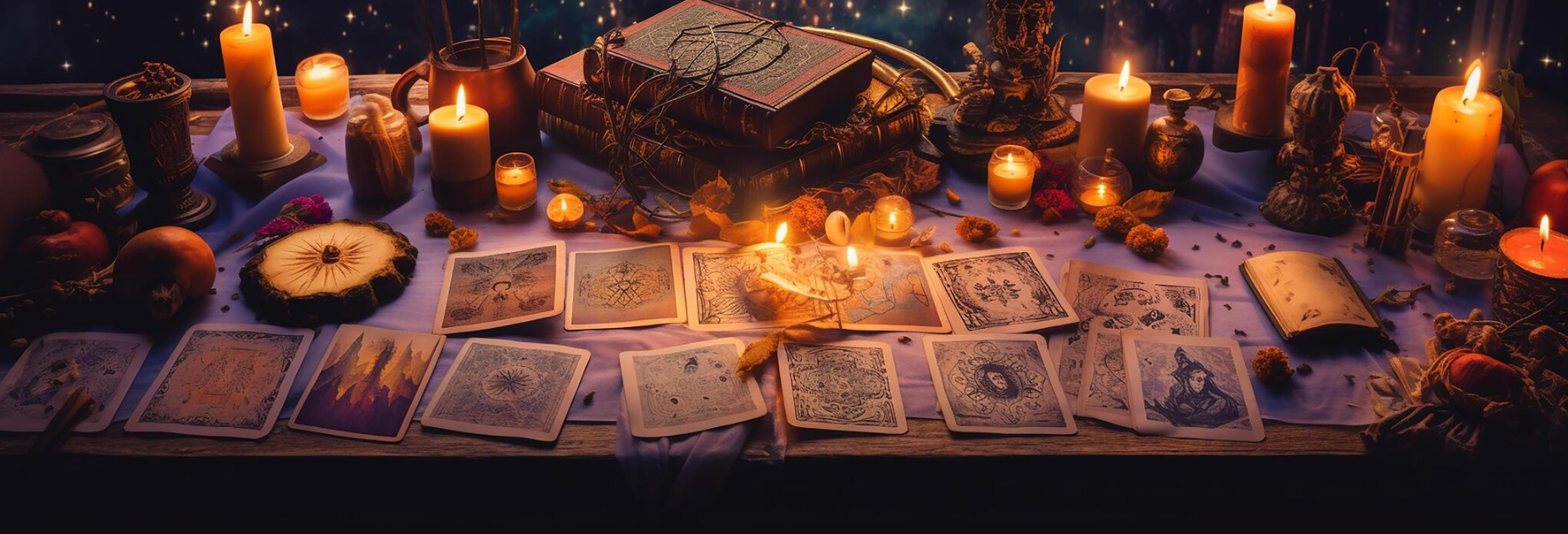
Tarot readings have been used for centuries as a powerful tool for self-reflection, spiritual discovery, and obtaining clarity on life’s most complex situations. Today, online Tarot platforms connect you with gifted readers from all over the world, bringing this ancient practice directly to your screen. Whether you are navigating relationship uncertainties, a major career shift, or looking for personal growth, a professional Tarot card reading offers a unique mirror to your subconscious mind, helping you uncover underlying motivations and pathways that you might not see in your daily life.
Unlike static fortune-telling, a modern Tarot session is a dynamic, collaborative experience. The cards don’t dictate a fixed destiny; instead, they highlight the energies, potential outcomes, and choices surrounding you. By understanding these influences, you are empowered to make decisions that align with your highest good and true spiritual path. Tarot acts as a compass, not a script, showing you where you are headed based on your current trajectory and how you can alter your choices to steer toward a more fulfilling future.

What is a Tarot Deck and How Does It Work?
A standard Tarot deck consists of 78 cards, rich in symbolic imagery, Jungian archetypes, and astrological correspondences. The deck is divided into two major sections, each serving a unique purpose in a reading:
| Arcana Section | Number of Cards | Primary Focus | Example Cards |
|---|---|---|---|
| Major Arcana | 22 Cards | Major life cycles, spiritual lessons, and karmic shifts. | The Fool, Death, The Lovers, The Tower, The World |
| Minor Arcana | 56 Cards | Daily trials, practical actions, emotions, and thoughts. | Three of Swords, Ace of Wands, Ten of Pentacles |
The Major Arcana (22 Cards)
These cards represent major life themes, karmic lessons, and monumental phases of your spiritual journey. Pulling cards like The Fool, Death, The Lovers, or The World signals that you are experiencing significant shifts or archetypal changes that shape your broader destiny. They represent events or inner processes that are largely structural and have long-term consequences on your life’s path.
The Minor Arcana (56 Cards)
These cards focus on the daily trials, practical actions, emotions, and thoughts that make up your day-to-day life. They deal with temporary situations, immediate decisions, and the people around you. The Minor Arcana is divided into four suits, each corresponding to a different element and area of life:
- Wands (Element: Fire): Creativity, passion, ambition, career drive, and the spark of action. Wands speak to what inspires you and drives your personal growth.
- Cups (Element: Water): Emotions, relationships, intuition, love, and emotional healing. Cups reflect your connections with others and your internal emotional state.
- Swords (Element: Air): Intellect, communication, logic, conflicts, and decision-making. Swords show the power of the mind but also represent anxiety, communication hurdles, and struggle.
- Pentacles (Element: Earth): Finance, physical health, home, stability, and material wealth. Pentacles govern your practical world, career achievements, and security.
Each suit contains cards numbered Ace through Ten, plus four Court cards (Page, Knight, Queen, King). Court cards often represent specific people in your life, personality archetypes, or stages of maturity in dealing with that suit’s element.
The Rich History and Evolution of Tarot
Tarot cards were not originally created for divination or spiritual work. They first appeared in 15th-century Europe, specifically in Northern Italy, as a card game designed for the nobility called “Tarocchi” or “Trionfi.” These early decks, such as the famous Visconti-Sforza deck, were hand-painted, extremely expensive, and served as a luxurious status symbol for royal families.
It wasn’t until the late 18th century that French occultists began associating the cards with ancient Egyptian mysteries, Hermeticism, and the Kabbalah, transforming Tarot into a tool for esoteric wisdom and self-discovery. Occultists like Antoine Court de Gébelin and Jean-Baptiste Alliette (known as Etteilla) published the first guides mapping tarot cards to divination meanings and created the first decks designed specifically for cartomancy.
In 1909, the publication of the Rider-Waite-Smith deck-which featured detailed pictorial scenes for the Minor Arcana for the first time, illustrated by artist Pamela Colman Smith under the direction of Arthur Edward Waite-revolutionized the practice. By placing expressive human illustrations and symbols on every card, Smith made Tarot highly accessible, intuitive, and globally popular. Today, contemporary artists continue to evolve the tarot, creating thousands of diverse decks reflecting modern spiritual sensibilities, psychology, and multicultural art.
Popular Tarot Spreads Used by Online Readers
During our hands-on test readings, we requested different layouts to assess how readers structured their guidance. Typically, a reader will shuffle the cards while focusing on your questions and lay them out in a specific pattern called a “spread.” Here are the most common layouts we encountered:
- Past, Present, Future (Three-Card Spread): The most versatile and popular layout. It provides a simple, direct snapshot of the timeline surrounding your query, helping you understand how past events led to your current state and what outcome is currently manifesting ahead. It is highly recommended for quick sessions or simple questions.
- Relationship Cross & Compatibility Spreads: Designed specifically for love readings. These spreads analyze the mutual energies between two people, uncovering hidden feelings, communication blocks, strengths, and what steps are needed to harmonize the relationship. They explore what each partner brings to the connection and the potential future of the bond.
The Celtic Cross (Ten-Card Spread)
A legendary, highly detailed spread. It maps out the core of your challenge, recent obstacles, subconscious desires, external influences, your hopes/fears, and the ultimate long-term trajectory. It is ideal for deep-dive sessions where you seek a complete overview of a complex situation. Here is how the ten positions are traditionally interpreted:
1. The Present: The primary energy surrounding you and the central issue at hand.
2. The Challenge: The immediate block or challenge crossing you (can be positive or negative).
3. The Foundation: The deep-seated factors, past influences, or subconscious desires driving the situation.
4. The Past: Recent events or influences that have recently passed but still affect you.
5. The Crown: Your conscious goals, hopes, and what you are actively focusing on.
6. The Near Future: The next major shift or event approaching you in the short term.
7. Self-Perception: How you view yourself and your current attitude toward the situation.
8. External Factors: The influence of other people, your environment, and external pressures.
9. Hopes and Fears: Your deepest hopes and worst fears regarding the outcome (shapes your decisions).
10. The Outcome: The most likely final resolution if you continue on your current path.
How to Ask Empowering Questions During a Reading
When we conducted our test sessions, we noticed a significant difference in the quality of the reading based on how we framed our questions. Tarot is a tool of guidance and reflection rather than a magic mirror that predicts exact lottery numbers. To get the most profound insights, it is best to ask open-ended, proactive questions. Instead of asking passive questions that make you feel like a bystander in your own life, frame them to invite actionable advice:
- Passive: “Will I ever get married?”
- Empowered: “What patterns should I heal or develop to attract a loving, committed partnership?”
- Passive: “Will my business fail?”
- Empowered: “What current strengths should I leverage, and what blind spots do I need to address in my business right now?”
- Passive: “Does my manager dislike me?”
- Empowered: “How can I improve my communication and relationship with my manager to build a better work environment?”
Psychic Tarot vs. Traditional Tarot Readers
When choosing an advisor online, you will encounter two primary reading styles, each offering a distinct feel and approach to the cards:
- Intuitive & Psychic Readers: These advisors use the Tarot cards primarily as a tool to spark their psychic senses (like clairvoyance, clairaudience, or clairsentience). The cards act as a gateway to tap into your energy field, providing direct intuitive messages, spiritual downloads, and validation. They might skip traditional card meanings entirely to tell you what they “feel” or “hear” energetically.
- Traditional & Esoteric Readers: These readers focus heavily on card symbology, numerology, Kabbalistic associations, astrological correspondences, and structural layout meanings. They offer a highly analytical and classical interpretation of the spread, drawing on centuries of historical Tarot study. This approach is highly structured, logical, and ideal for seekers who want a classic, text-based explanation of the cards.
Deciphering Tarot Card Reversals
When a card is drawn upside down during an online reading, it is known as a “reversal.” Different Tarot readers interpret reversed cards in various ways, adding subtle layers of meaning to your spread:
- Internalized Energy: A reversed card often indicates that the energy of the card is playing out internally rather than externally. For example, a reversed Three of Swords might mean you are in the private, quiet stages of healing from a heartbreak, rather than experiencing a new external conflict.
- Blocked or Delayed Energy: It can signal that the natural flow of the card’s energy is currently blocked, slowed down, or meeting resistance. This highlights areas where you need to focus your patience and effort to release blockages.
- Shadow Aspects: Reversals can reveal the negative or shadow side of a card’s archetype. For instance, the Magician upright represents manifesting and focus, while reversed it might point to manipulation or scattered energy.
Not all readers use reversals; many prefer to read all cards upright, relying on surrounding cards and intuitive vibes to detect blockages. If you have a preference, you can always discuss this with your reader at the start of your online session.
How to Choose the Right Tarot Platform and Reader
When our review team evaluated these platforms, we found that finding the right reader depends heavily on your personal questions and style preferences. Top networks offer detailed filters, which we used to browse readers by their specific decks and reading methods.
To find your ideal reader, follow these best practices based on our team’s direct experiences:
1. Filter by Reading Style: Choose whether you prefer a direct, no-nonsense reader or a compassionate, gentle advisor.
2. Check Unedited Client Reviews: Read the reviews on the reader’s profile. Look for feedback that mentions accuracy, specific predictions that came true, and the advisor’s tone.
3. Listen to Intro Audio/Video: Hearing the voice of the advisor can help you assess if your energies resonate, ensuring a comfortable reading session.
4. Use Welcome Promotions: Leverage introductory packages, like Keen’s first 5 minutes for $1 or Kasamba’s 3 free minutes, to test multiple readers at low financial risk until you find the perfect connection.
Frequently Asked Questions About Tarot Reading
Are online Tarot readings as accurate as in-person ones?
Yes. In Tarot reading, energy and intention are not limited by physical space. Vetted online readers can connect with your aura and energy field through your voice, chat interaction, and focused questions just as effectively as if you were sitting across a physical table.
Can the Tarot cards predict the future?
Tarot card spreads show the most likely trajectory based on your current actions, thoughts, and surrounding energies at the time of the reading. Because you have free will, you can always change your choices to shift your future path. Think of Tarot as a cosmic weather report rather than a set-in-stone sentence.
How often should I get a Tarot reading?
For general guidance, a monthly reading or a seasonal check-in is ideal. Getting readings too frequently on the exact same question can lead to confusion and dependency. Give the cards and the energies surrounding your life some time to unfold and manifest before checking back in.
What is the difference between Tarot cards and Oracle cards?
Tarot cards follow a highly structured system with exactly 78 cards divided into Major and Minor Arcana. Oracle cards have no set structure, number, or rules, allowing the deck creator complete freedom. Oracle decks are often used for general inspiration or daily advice, whereas Tarot offers a systematic, detailed map.
Can I do my own Tarot reading, or is it better to see a professional?
You can certainly read Tarot for yourself for daily guidance and self-reflection. However, a professional reader brings years of experience, objective energy, and deeper intuitive insights, which is especially helpful when dealing with complex, emotionally charged situations or personal blind spots.